
October is Family History Month — the perfect time to rediscover your roots
October has long been recognised as Family History Month — a time to reconnect with our heritage, explore the stories of our ancestors, and preserve the memories that shape who we are today.
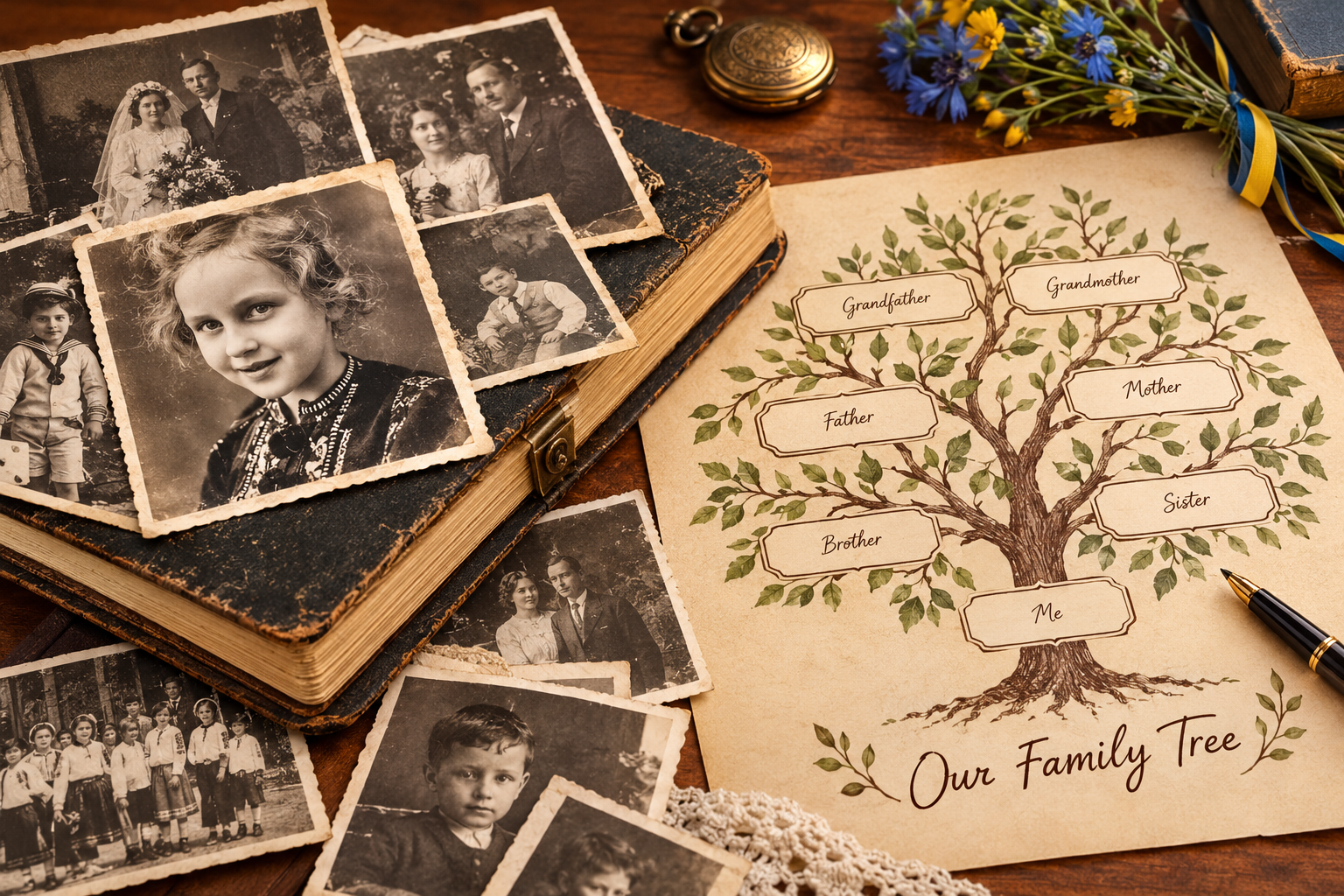
The idea began in the United States in the early 2000s, when several major genealogy organisations — including the National Genealogical Society (NGS) and the Library of Congress — launched an initiative to dedicate October to promoting family history research, archival preservation and public engagement with genealogy.
The concept quickly gained momentum. Libraries, archives, museums, universities and family history centres embraced the idea, turning October into a month filled with talks, workshops, exhibitions and community projects. Over time, the initiative spread internationally. Today, October is widely used for genealogy events by organisations in Canada, Australia, and increasingly across the United Kingdom, where libraries, local history groups and diaspora communities run heritage‑focused activities throughout the month.
Why October?
There are several practical reasons why October became the ideal month for exploring family history:
Libraries and archives begin their autumn programme of events.
Schools launch heritage and identity projects.
It aligns with the start of the academic year.
It avoids major holidays.
It leads naturally into November’s remembrance traditions — including Remembrance Day (Armistice Day) in the UK and Veterans Day in the US — when both countries honour those who served and those who were lost in war.
October invites reflection. It encourages us to look back before we look forward.
Join us this October: explore your family’s story
We invite our community to dedicate a few minutes each day to discovering your own family history. Genealogy doesn’t always require hours of research or long evenings spent searching databases. Sometimes the most meaningful progress comes from 15–30 focused minutes on a single small task.
Throughout the month, you can do small, manageable activities which can help you strengthen your research skills, improve your organisation, and perhaps uncover new clues about your ancestors — whether they lived in Ukraine or elsewhere in the world.
A practical 7‑day plan to begin your family history (15–20 minutes a day)
Day 1 — Start with the foundations: gather what you already know
The first challenge is simple: Start with yourself and your closest relatives. Write down the names, birth dates and birthplaces, occupations and places of residence of your four grandparents. Are any details missing, uncertain, or based only on family memory? Highlight those gaps — you’ve just created your first list of research questions.
One small step. One piece of the puzzle. One moment of connection with your past. This is the most effective starting point — every reliable family tree begins with confirmed information.
Day 2 — Explore documents at home
Look through certificates, passports, old photographs, letters, military papers, or diaries. These often contain unique details not found in official archives.
Day 3 — Collect oral history
Speak to one relative. Ask simple questions: Who were their parents and grandparents? Where did they live? What stories do they remember? Oral history is one of the fastest ways to find new leads.
Day 4 — Create your first family tree sketch
Draw a simple chart: you → parents → grandparents. Use paper, Google Docs, MyHeritage (free family tree up to 250 names and in Ukrainian) or FamilySearch (free). This becomes your research framework.
Day 5 — Locate one official record
Choose one ancestor and find one document: a birth record, marriage certificate, death record or census entry. Starting with basic records is the most effective strategy for beginners.
Day 6 — Organise your findings
Create folders on your computer or Google Drive. Start a “Research Log” noting who you searched for, where you looked and what you found. This prevents duplicated work and keeps your research structured.
Day 7 — Review and plan ahead
Look over everything you’ve gathered. Identify gaps and questions. Choose three next steps for the coming week.
What you can achieve in one month
With just 15–20 minutes a day, you can realistically:
Build a basic family tree covering 3–4 generations
Collect 10–30 documents (photos, certificates, letters, archive records)
Discover your first family stories
Locate your first archival records
Identify key themes for deeper research (property ownership, migration, military service, repression, resettlement, family legends)
Create a simple but effective system for organising your genealogy work
Start today — and you’ll be amazed at how far, and how deep, your journey into your family’s past can take you.
